
smlp: Colin keeping me company on the sofa.
Ryton2Ethiopia.org 2009 – Day 3 and Day 4 diary.
(Taken from Ryton2Ethiopia 2009 diary pages at Ryton2ethiopia.org )
Day 3
The market – Museum – Prince Abi
Today we went to the indoor market – said to be the biggest market in Africa! It was so so busy and we were all a bit wary but we soon got used to it, and put our haggling skills to the test – particularly Alex T and Ashleigh who were at one particular stall for about 20 minutes!! We all felt famous because everywhere we turned everyone was staring at us, and we couldn’t believe how friendly the people were. There were so many sights, sounds and smells that we were overwhelmed but all thoroughly enjoyed it.

We went to the museum which was really interesting as we got to see all different bones in a timeline from the very oldest to more recent times. We were all particularly fascinated by Lucy who was the 2nd oldest homoerectus skeleton in the world at 3.2 million years old. She was tiny!! And we were all surprised to hear she got her name from ‘Lucy in the Sky with Diamonds’ by The Beatles!
When visiting Prince Abi, a very eccentric Rastafarian who claimed to be a prince, he told us that his restaurant/museum had cost 5,000 birr to build and was of an Indian design; it was beautiful! He was very welcoming, friendly and the food was delicious – he was vegetarian, which suited Lauren and Anna just fine! He also told us how he got his dreadlocks and by the end of the night none of us wanted to leave. The taxi ride on the way there was an interesting experience, half of us managed to squash in somehow and it was a very bumpy ride! On the way back we were pleased to have English music which, despite being Myley Cyrus, we were excited to hear!
Back at the hotel, we all joined in with the biggest, longest card game of ‘Cheat’ ever which brought us together even more as a group as we all had lots of fun.
Lauren and Georgia
Day 4
To Awash National Park
Today was an early start, considering we had very little sleep after the most spectacular thunderstorm you could ever imagine! We had to be all packed and have had breakfast by 8.30! Pancakes with marmalade seemed to be especially popular today. We all jumped back on the bus to start a new adventure! First we headed to the market to buy lunch, as well as onions, as we only had 3 to go between 20 people. Then we were ready to head for Awash, all excited at the possibility of seeing lions, and tigers and bears, oh my!! (had to be done!) The journey was unbearable with the heat hitting temperatures we never thought existed! After getting a bit lost, and lots of turns around, we stopped at the The Family Hotel in Debre Zeit. It overlooked a volcanic crater filled with water, making beautiful scenery which we could enjoy whilst having a nice, cool drink. At one of our stop offs, we saw another lake, complete with crocodiles on the waters edge!! After getting back on the road, we drove past about 20 dead camels, not sure how they came to their death, but it silenced us all. After that we needed a boost, so a sing song was in order. Songs led by the back of the bus included Disney classics, Grease medleys and R&B favourites.

Finally we arrived at the park, before the heat completely took it out if us. On arrival we spotted an oryx which got us all suitably excited! Some were also lucky enough to see some klipspringers, jumping across the road. As we were trying to find the campsite, we stumbled across a rather angry caged lion! (which we later found out was caged for a murder in Somalia!) We eventually found the camp site with a visitor waiting to greet us, a baboon! We couldn’t believe our eyes, and we nick named him Rafiki, for obvious reasons! We quickly got to work putting up the tents and cooking tea, on the menu was pasta and tomato sauce, mmmm! The inviting smell attracted some more of our neighbours, vervet monkeys, a few with their very cute little babies clinging on tightly! After tucking into our tea, we went to the Awash River and water falls, which were amazing to see. The spray from the falls was a refreshing moment for all! We headed back to camp to try and settle for the night, as we knew we had yet another early start – 5am! We sat for a while watching the lightning which seemed to be all around, and heading our way, yet it seemed to pass over us which we were all grateful for, sleeping only in tents! After the fire died down and the night closed in we headed into our saunas (oops we mean tents!) We all braced ourselves for a very uncomfortable, moist and sticky night. Lush! As another day’s adventure ended we looked forward to the next day including a safari style experience!
Anna and Viki S
(Taken from Ryton2Ethiopia 2009 diary pages)
For more information about Ryton2Ethiopia CLICK HERE
If you would like to make a donation CLICK HERE
Sara + Paul 20 June 2009
I was very proud to have the opitunity to to be the photograthy at my brother wedding and add a sister to my family. This video is a quick collection of som eof the unedited photo take on Paul and Sara’s special day.
damn straight its curvy!
smlp.co.uk posted a photo:

Another shot from the archive. This is the Gateshead Newcastle Millennium bridge (The Blinking Eye).
I took this shot one Sunday afternoon in early 2008 when they lifted the bridge. The shot has been flipped round so that it looks like the cables are holding it up.
Let me know what you think of it, good or bad.
A Brief History of The Millennium Bridge
The bridge was lifted into place in one piece by the Asian Hercules II, one of the world’s largest floating cranes, on 20 November 2000. It was opened to the public on 17 September 2001, and was dedicated by Queen Elizabeth II on 7 May 2002. The bridge, which cost £22m to build, was part funded by the Millennium Commission and European Regional Development Fund. It was built by Volker Stevin.
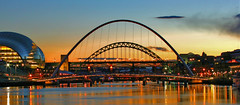 Already acclaimed worldwide for its physical and aesthetic beauty, it has fast become a significant tourist attraction in its own right. The bridge was the focus of a Spencer Tunick installation on 17 July 2005.
Six 45 cm diameter Hydraulic rams (three on each side, each powered by a 55 kW electric motor) rotate the bridge back on large bearings to allow small ships and boats (up to 25 m tall) to pass underneath. The bridge takes as little as 4.5 minutes to rotate through the full 40° from closed to open, depending on wind speed. Its appearance during this manoeuvre has led to it being nicknamed the “Blinking Eye Bridge”.
The bridge has operated reliably since construction, opening to allow river traffic to pass. It also opens periodically for sightseers and for major events such as the Northumbrian Water University Boat Race and the Cutty Sark Tall Ships’ Race. Its reputation was untarnished until October 2004 when the failure of a £200 circuit board prevented the bridge from opening.
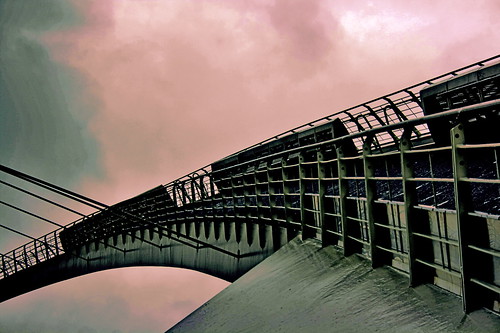
The construction of the bridge won the architects Wilkinson Eyre the 2002 Royal Institute of British Architects (RIBA) Stirling Prize and won Gifford the 2003 IStructE Supreme Award. In winning the Stirling Prize, Wilkinson Eyre became the first, and so far the only, firm of architects to retain British architecture’s most prestigious prize — they won the 2001 prize for the Magna Science Adventure Centre. In 2005, the bridge received the Outstanding Structure Award from International Association for Bridge and Structural Engineering (IABSE).
Swine Flu Deterrent
smlp.co.uk posted a photo:
“wash your hands regularly with soap and water”
This was taken a year ago inside The Gateshead Sage. If I remember correctly this was taken one week before the first Newcastle Photo Walk. So its happy birthday to #npwalk.
Lying on the other side of the fence
smlp.co.uk posted a photo:
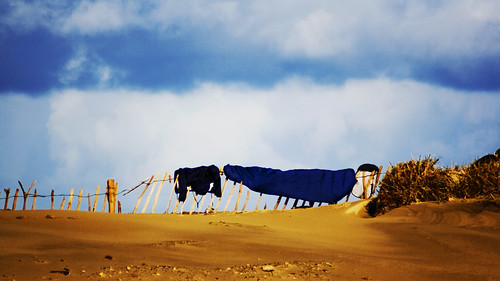
I don’t actually think anybody is lying on the other side. The blanket and jacket look like they have been hung up to dry.
The photo was taken in South Shield on a Photo walk outing back in April, 2008. At the time I passed over this picture in favor for a one with a dog in it.
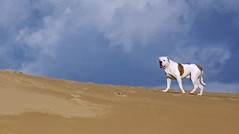
Please let me know what you think 🙂
Ryton2Ethiopia.org 2009 – Day 1 and Day 2 diary.
(Taken from Ryton2Ethiopia 2009 diary pages at Ryton2ethiopia.org)
Day 1
Arrival in Addis
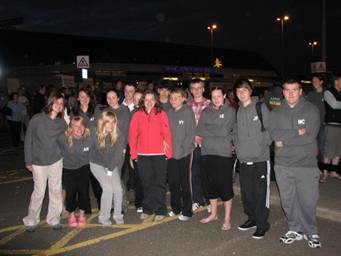
After a ridiculously long day of being up and down in various different aircrafts and moving between continents, we finally arrived in Addis sleepy eyed and bushy tailed at around 9 o clock local time. This being after Leigh-Anne had her bag checked at both Newcastle and Amsterdam airports and toiletries confiscated after having bought them minutes before!
It took us a while to get our money changed and baggage found, when we finally did however, we also realised that we were without tents and they were still in Newcastle, bad crack!! We pressed on like brave soldiers toward the Yonas Hotel in the city centre on a true Ethiopian style bus- our baggage strapped to the top of the roof. Meheret, sister to Bisrat who we will get to meet in Bahir Dar, met us at the airport and helped us along toward the hotel. Once we had unloaded our bags and located our rooms, we chilled over a nice cold bottle of Mirinda- Ethiopia’s alternative to Fanta- and discussed our activities for tomorrow.
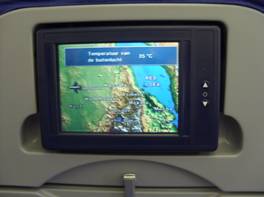
Alex T and Greg A
Day 2
Day in Addis
Our first morning was an early rise, after which we headed down to breakfast where we could choose between eggs, porridge and toast. Shortly after, we were split into groups to tackle our first real experience on the streets of Addis, where we were set the task of finding certain items for the cheapest price by haggling with the locals. Not as easy as it sounds! We also slowly became accustomed to the regular sights such as corn on the cob and farm animals on the street.
After purchasing our lunch for the day ahead, which consisted of gourmet fresh bread, bananas and oranges, we were given a spare hour to explore the local surroundings. Whilst doing so we stumbled upon one of the most violent football matches we’ve ever seen! A pitch which was covered in pot-holes, muddles and sharp rocks which didn’t seem to faze the locals as they threw themselves into vicious tackles.
After the football match ended we then headed off in the mini bus to the Entoto. What an experience this was, with children climbing on the bus and clinging on. In the mountains there were spectacular views of Addis and we were treated well by the children living in the mountains, who showed us how to crack a whip in style – not that any of us picked it up! On our return to the hotel, we stopped at the market to do some haggling which was quite an experience, as we were constantly surrounded by the locals trying to get us to buy what they have to offer. A funny moment when at the market was when Jack was continuously referred to by the locals as ‘Harry Potter’, which the whole group found hilarious; Jack, not so much! Later on at night, we ventured to the ‘Zebra Grill’ where we were all mildly surprised by how delicious the local cuisine was. Overall the first day in Addis was an eye opener to say the least, but an enjoyable day all the same, from haggling with the locals to experiencing the top of the picturesque Ethiopian mountains the day was a complete success.
Jack & Alex R
(Taken from Ryton2Ethiopia 2009 diary pages)
For more information about Ryton2Ethiopia CLICK HERE
If you would like to make a donation CLICK HERE
smlp: http://twitpic.com/acrje Next door’s flat is on fire. Great! #fire
smlp: Next door’s flat is on fire. Great! #fire
Hats off to Coca-Cola
smlp.co.uk posted a photo:
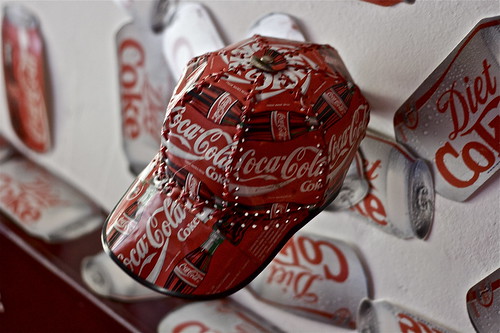
Last time I was in Amsterdam the apartment we were staying in was covered with Coca-Cola memorabilia. Ever since then I have been trying to work out why the hell cans of pop as 330ml in size and not 400ml or even 300ml.
If any one knows please share it with me.
A Brief History of Coca-Cola
Atlanta Pharmacist and former Confederate Captain in the Civil War, Dr. John Styth Pemberton was the inventor of the “secret formula” that would later become known as Coca-Cola. In 1886, while working on an elixir or in his words; “the ideal brain tonic”, Dr. Pemberton took the basic formula of his earlier French Wine Coca, took out the wine, added extract of Cola nut, essential oils and other ingredients to concoct what his bookkeeper, Frank Robinson, later branded Coca-Cola ®. Mr. Robinson was also responsible for the Spencerian script used by Coca-Cola which was later to become the most recognized trademark in the world. John Pemberton died in 1888, and through a series of complicated transactions, another Atlanta druggist, Asa Candler, ended up with control of the Coca-Cola Company. It was through Candler’s brilliant marketing that Coca-Cola’s popularity began to spread throughout the country. Another stroke of marketing genius was introduced by Joseph Biedenharn of Vicksburg, Mississippi. In 1894, the Biedenharn Candy Company was the first to bottle Coca-Cola in the Hutchinson stoppered bottles. Two enterprising lawyers from Chattanooga, Tennessee named B.F. Thomas and J.B. Whitehead, recognized the potential of selling Coca-Cola in bottles and purchased the bottling rights for almost the entire country from an unconvinced Asa Candler. Coca-Cola’s history is rich with intuitive company leadership. Under the leadership of men like Robert Woodruff, Coca-Cola became the most famous soft drink and trademark in the world.
The Liver Building from the river Mersey
smlp.co.uk posted a photo:
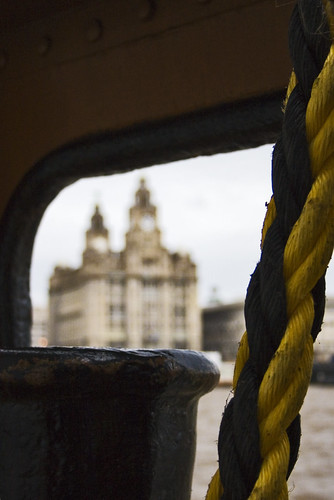
I just got back from staying at the over side of the river in the Wirral this weekend. I didn’t take my camera but I was sure that I have some pictures still waiting to be at looked from the last time I went to Liverpool in October last year. I found this shot of the Liver Building taken from the Mersey Ferry.
Probably the most photographed and well known building in Liverpool. It is located at Pier Head and stands proud and majestic against the skyline of Liverpool and the riverfront. The building is made of reinforced concrete and was the first large scale building of its type. It was built in 1911 for the Royal Liver Friendly Society.
This impressive architectural masterpiece features a pair of clock towers from which shipping could tell the time as they passed en route along the river. The clock faces are actually larger than the clock face of Big Ben in London. In fact, they are the largest clock dials in Britain. In 1953 electronic chimes were installed to serve as a memorial to the members of the Royal Liver Friendly Society who died during the two World Wars. At night time the clock dials are illuminated.
A statue of a Liver Bird spreading its wings from the top of each clock tower enhances the glory of the building and its impressive features. The Liver Bird, the official mascot of Liverpool is a cormorant (seaweed bird) which in bygone times could often be seen flying alongside the Mersey River with seaweed in their beaks.
Please let me know what you think of the shot.